Drip-feeding large programs to a Fanuc control
Your 3D-surfacing program is 8 MB. Your Fanuc control has memory for a fraction of that. Drip-feed (DNC mode) is how shops run it anyway — here's how it actually works.
What drip-feed actually does
In drip-feed mode the program never loads into control memory. The control executes blocks as they arrive from the DNC PC — a steady stream of G-code, one buffer at a time, for as long as the cut takes. Fanuc calls this DNC operation (tape mode / RMT on most controls).
Flow control keeps the stream honest: when the control's buffer fills, it sends XOFF and the sender pauses; when the buffer drains, XON resumes the flow. Done right, the machine never data-starves mid-cut.
Setting up the Fanuc side
- Set the machine to DNC/RMT mode (mode selector or MDI setting depending on control).
- Match serial parameters on both ends: typically 4800–19200 baud, 7 data bits, even parity, 2 stop bits for older controls — check parameter 0101/0111 ranges on your specific control.
- Enable XON/XOFF (DC1–DC4 control codes) so the control can pace the sender.
- Press cycle start — the control asks the line for data and the DNC server starts streaming.
Why dropouts happen (and the fix)
Classic drip-feed failure: the cut stalls mid-surface with an alarm. Usual suspects — noisy RS232 cable runs across the floor, a laptop going to sleep, or Windows deciding the COM port belongs to something else. Long serial cables near VFDs and spindle drives pick up noise; every meter makes it worse.
The modern fix is to shorten the serial leg to almost nothing: mount a serial-to-Ethernet converter inside the machine cabinet, centimetres from the control's port, and let Ethernet carry the data across the floor. Ethernet handles distance and noise; the RS232 run drops to a patch lead. A dedicated DNC server (not someone's laptop) keeps the stream alive for multi-hour cuts.
Drip-feed with ElectronIx DNC
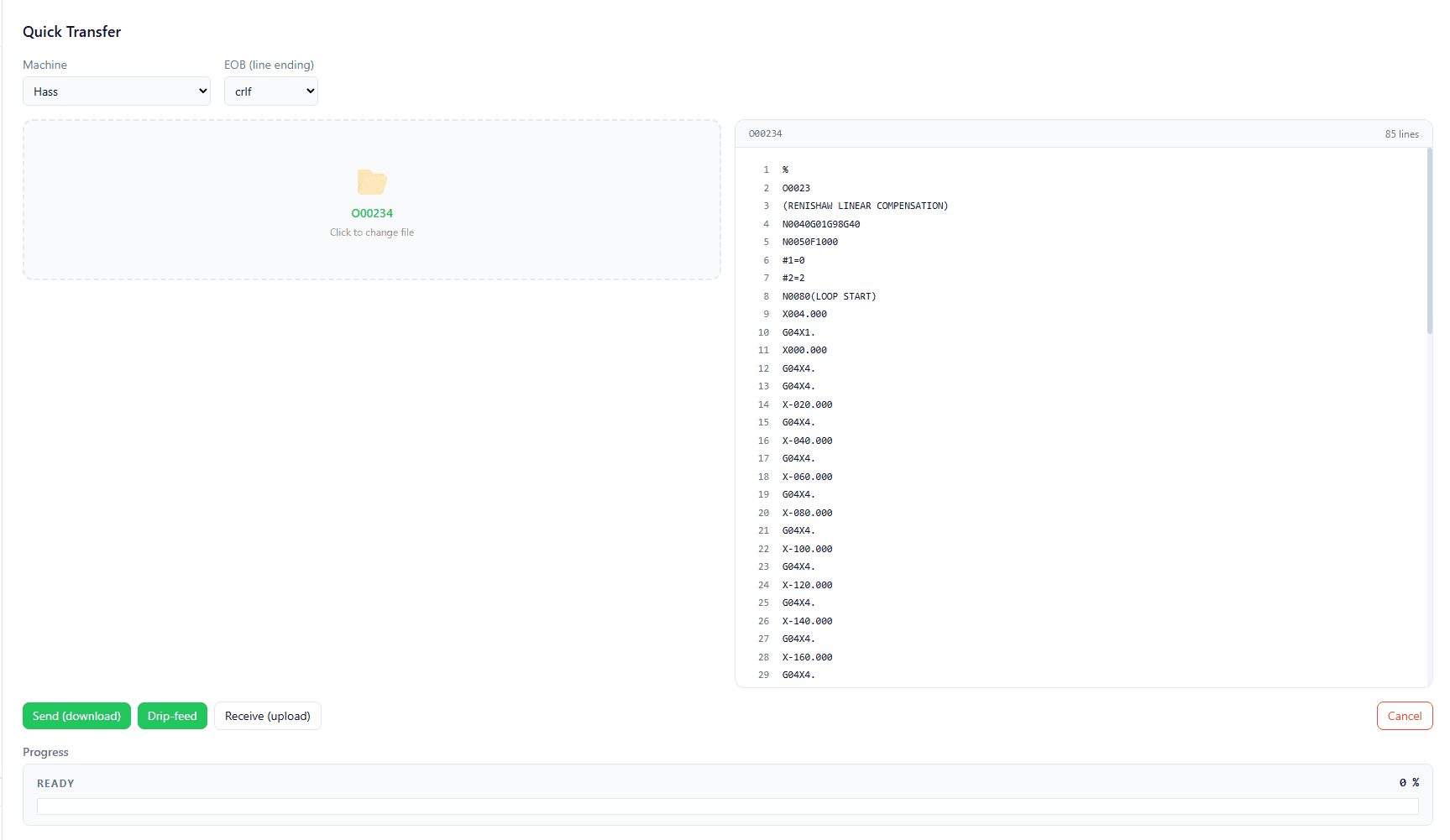
ElectronIx DNC streams to ~25 machines at once from one Windows PC, with per-machine XON/XOFF handling and a live dashboard showing file, bytes sent, and transfer state per CNC. It runs headless in the background and restarts with the PC, so a multi-hour mold cut doesn't depend on anyone remembering to keep a laptop awake.
If the transfer is failing before you get as far as drip-feeding, the Fanuc RS-232 settings reference covers the parameters, the baud-rate codes, and what alarms 085, 086 and 087 are telling you.